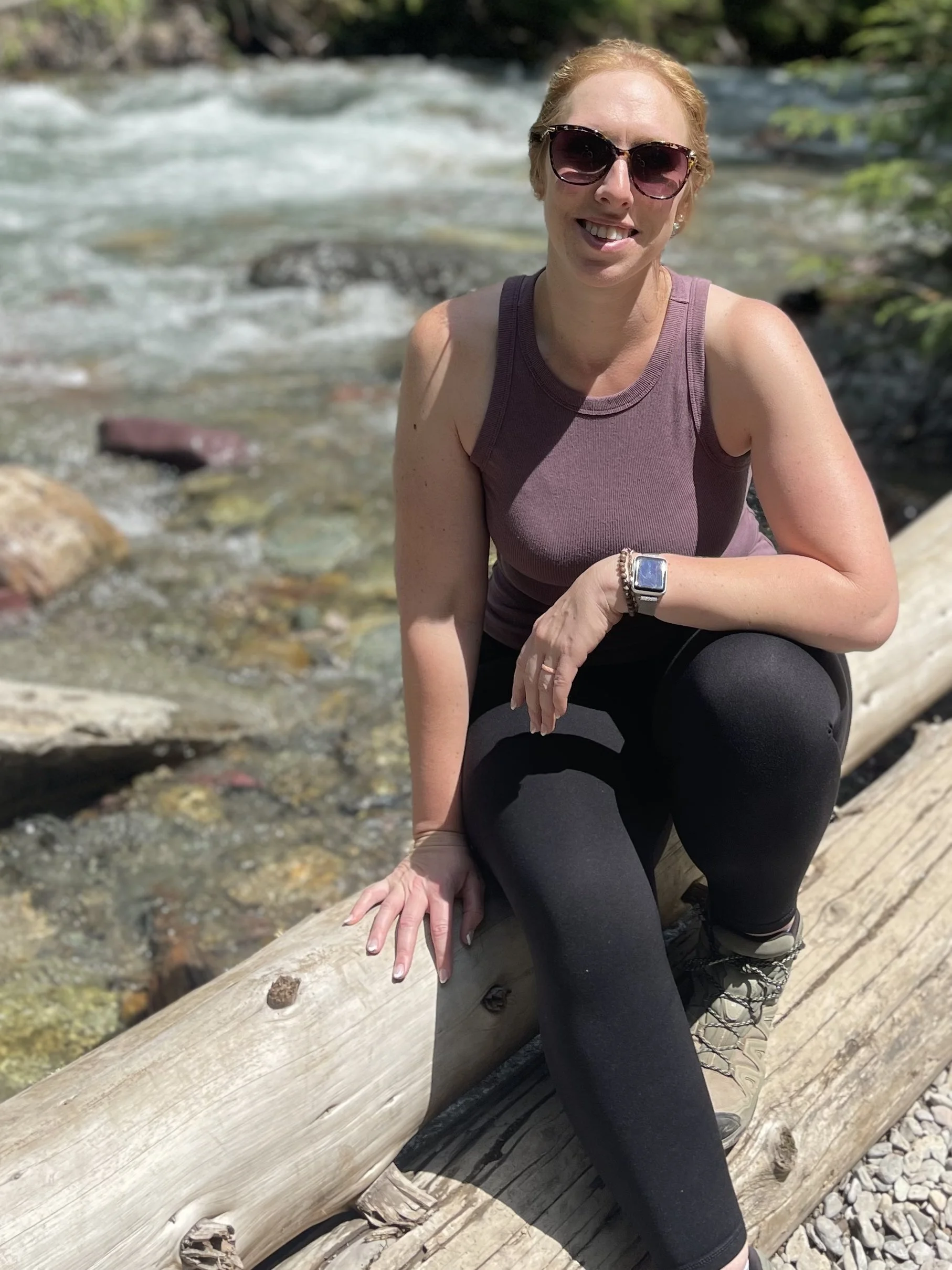
What My Foot Surgeries Taught Me About Planning a Better Trip
A personal story about CMT, two reconstructive surgeries, cross-country medical travel — and why accessible travel is far more possible than you think.
I was born with a progressive nerve condition called Charcot-Marie-Tooth disease (CMT). It didn't lead me into travel advising, but it opened my eyes to a world of possibilities I might never have seen otherwise. And it's a big part of why I believe so deeply in the idea that travel should be accessible to everyone.
This post is my story. It's also for anyone who has ever talked themselves out of a trip because of a health condition, a mobility limitation, or a fear that the logistics would just be too much. Because I'm here to tell you: accessible travel is far more possible than you think. And I'm living proof.
Living With CMT: The Years of Pushing Through
Charcot-Marie-Tooth disease is a hereditary neurological disorder that affects the peripheral nerves. Over time, it causes muscle weakness and atrophy, particularly for me, in the feet and legs. That meant my feet slowly rotated inward, I had severely high arches, and significant foot drop that made every step a challenge. A stress fracture in my 5th metatarsal eventually became a full break. There was nothing to be done about it, no surgery offered, no real solution. Just rest, and then carry on with a painful lump on the side of my foot that I lived with for over ten years.
I spent years in the restaurant industry, on my feet eight, ten, twelve hours a day. Every day was a quiet negotiation with my body. I heard the same things from doctors over and over:
"That's just the nature of the disease."
"Try physical therapy."
"We can put you in braces, but then you'll start to really lose muscle function."
I accepted those answers for years. Until I became a mom, and something shifted in me. I looked at my son and thought: I cannot spend the rest of his childhood in this much pain. I cannot keep up with him like this. There has to be more.
Finding Dr. Pfeffer — 3,000 Miles Away
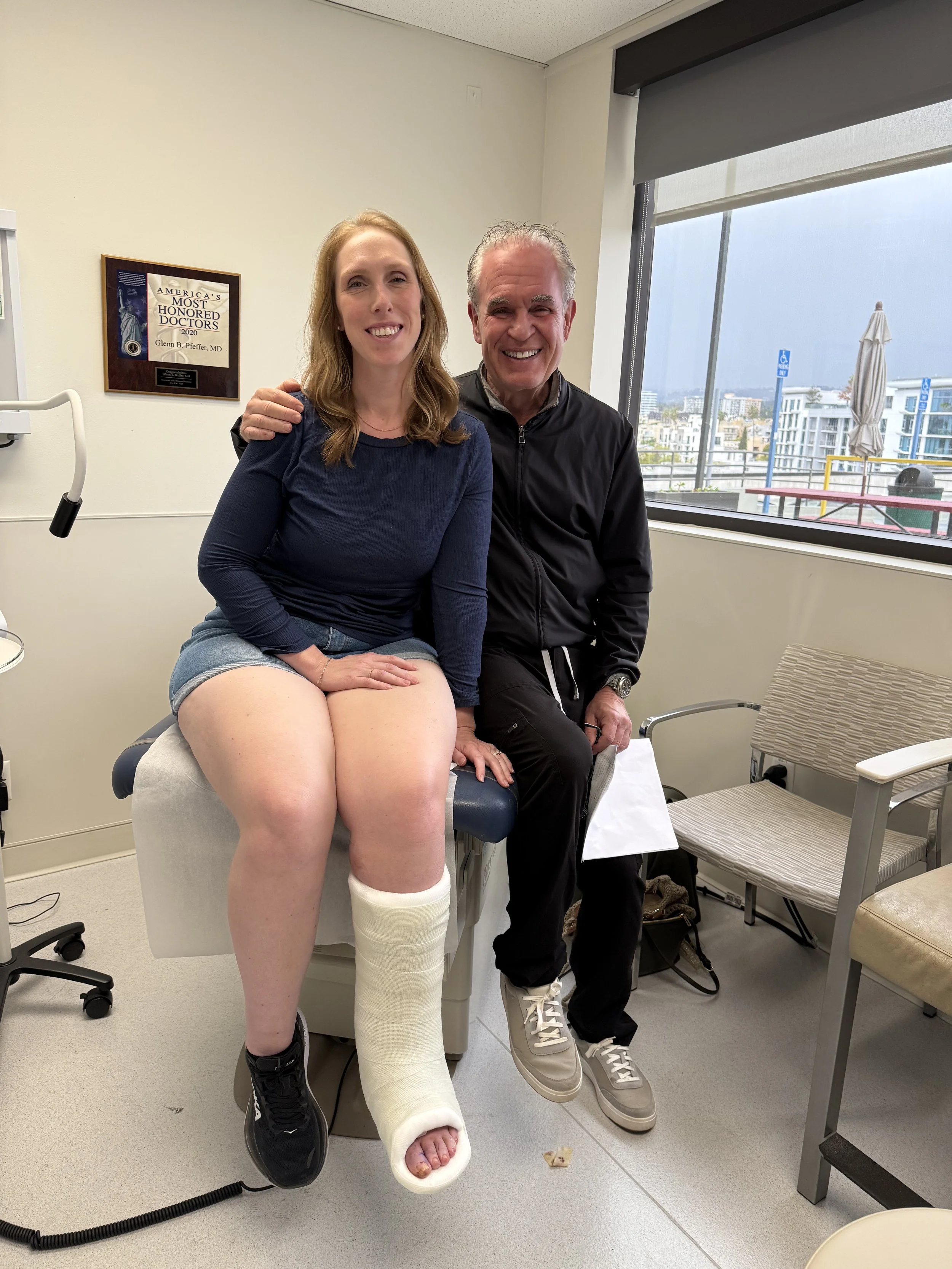
I started researching specialists. Not just any orthopedic surgeon — someone who truly understood CMT and reconstructive foot and ankle surgery. That search led me to Dr. Glenn Pfeffer at Cedars-Sinai in Los Angeles, California.
I live in small-town Pennsylvania.
My first reaction was: how is this going to work? But then I checked my insurance. He was in-network. My brain started moving. I reached out, scheduled a video consultation, and within two weeks, surgery was scheduled. We did this twice — once for each foot.
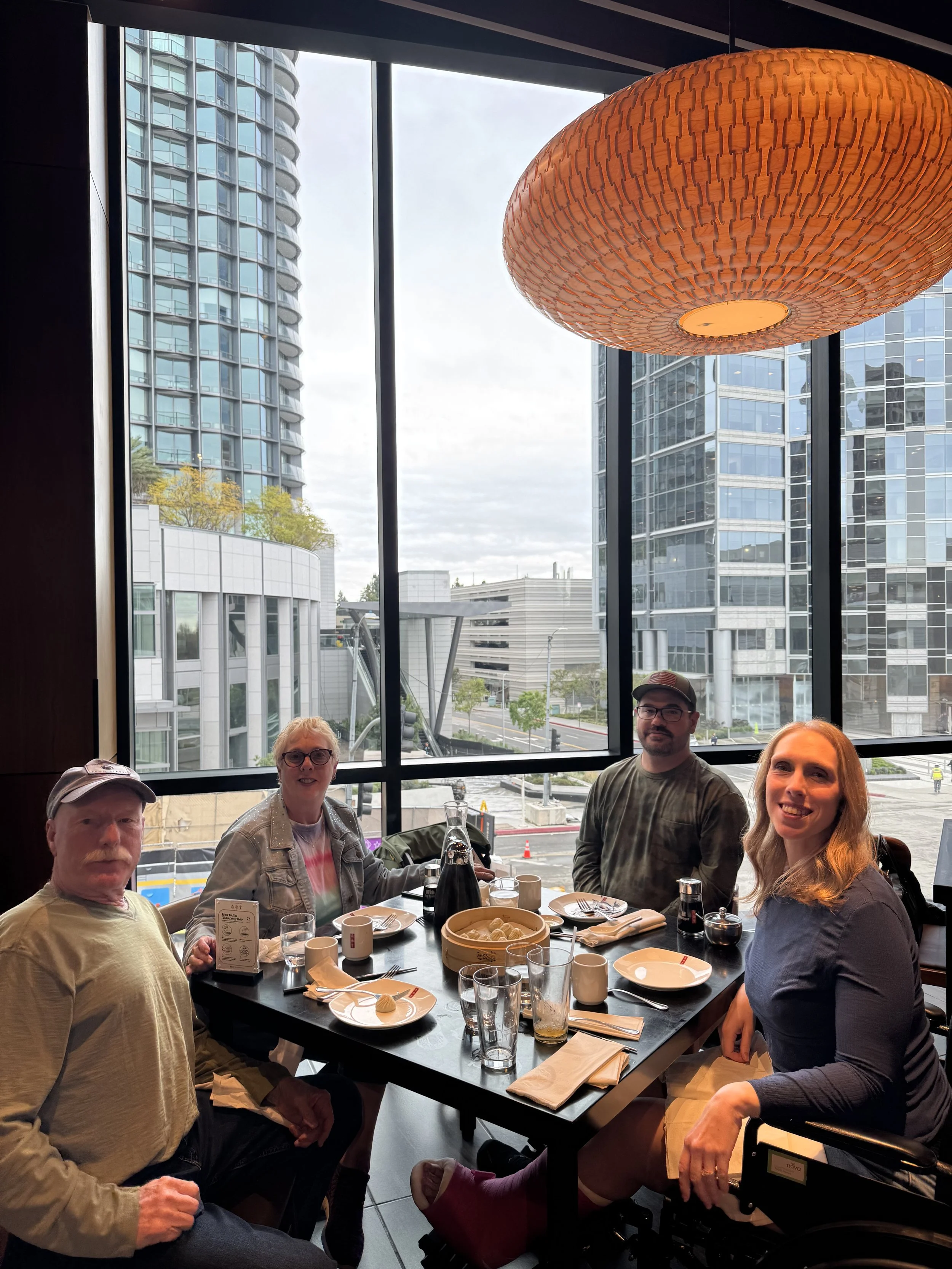
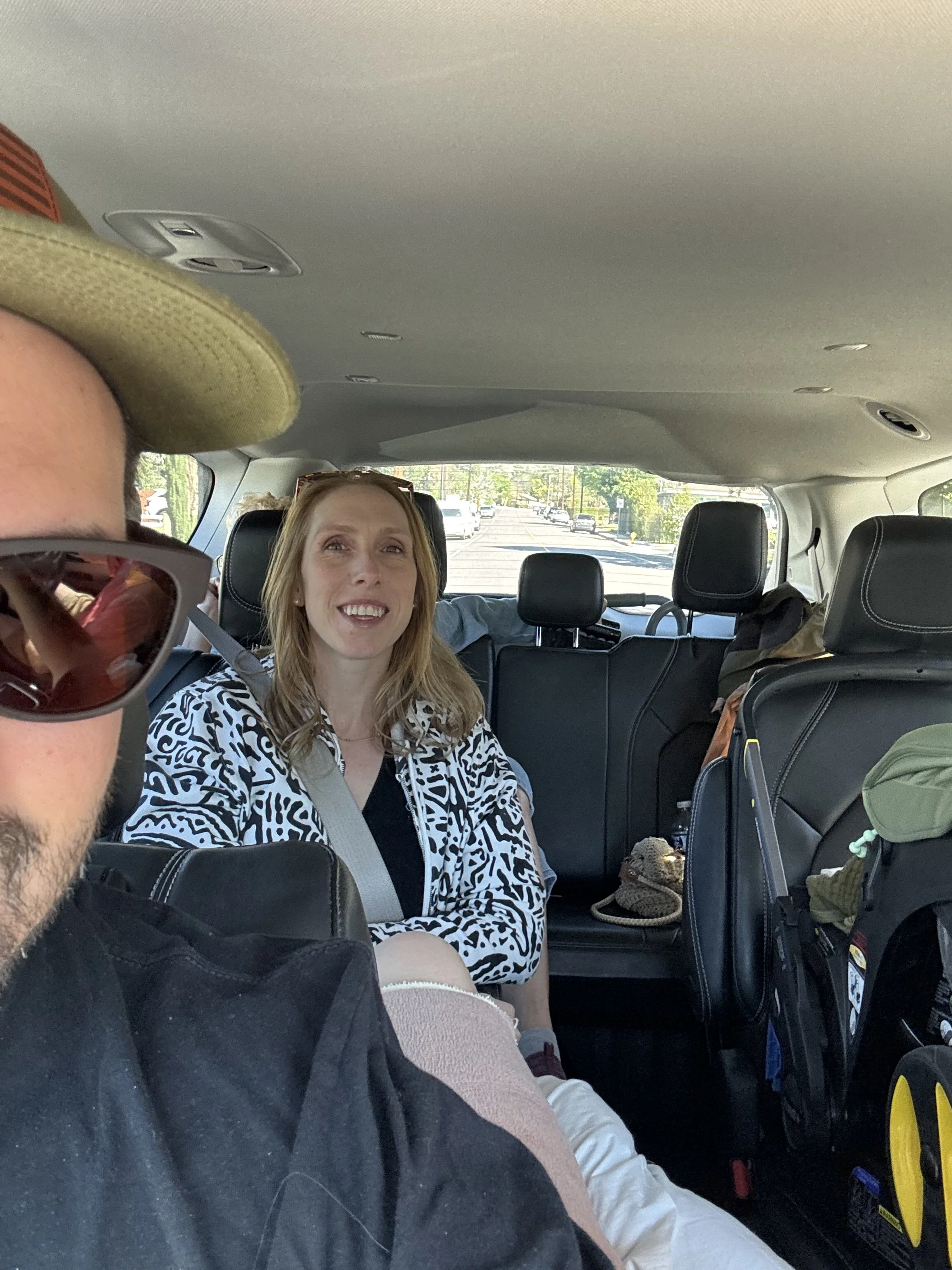
The surgery itself felt like the easy part. What required real planning was everything around it: two weeks post-op away from home, my newborn son with me the entire time (I was still breastfeeding — more on that in a future post, because traveling with an infant has its own whole category of logistics), navigating airports and flights with a cast on my foot, and figuring out accommodations that actually worked.
I had my husband and parents with me both times, and I'm so grateful for that. But through online communities and Dr. Pfeffer's patient network, I connected with others who had traveled from across the country for the same procedure, some with far less support. It is doable. It just takes the right preparation and the right questions.
What I Learned: Accessible Travel Is More Possible Than You Think
Going through two major reconstructive surgeries and the travel that surrounded them taught me more about accessible travel than any course ever could. Here's what I want you to know:
Airlines Will Help You — You Just Have to Ask
Every major airline is required to provide mobility assistance, and most go above and beyond when you request it in advance. Wheelchair assistance from curb to gate (and gate to curb on arrival) is free. You can pre-board, avoid the long terminal walks, and have staff assist with your carry-on. I know it can feel vulnerable to ask, but please ask. It changed my experience completely.
Request wheelchair/mobility assistance at booking and again at check-in
Choose aisle seats for easier movement
Look into bulkhead or front-of-cabin seats for more legroom
Allow extra connection time — airports are large and rushing is never worth it
"ADA Accessible" Doesn't Always Mean Comfortable — Here's What to Ask
Whether you're booking a hotel, a vacation rental, or an extended-stay suite, "ADA accessible" on a listing doesn't always translate to actually comfortable or practical for your specific needs. The photos online rarely tell the full story.
Before you book, ask these questions directly:
Is the accessible room close to the elevator?
Is there a roll-in shower, or a tub with grab bars?
What is the terrain like between the entrance and the room — any steps, uneven paths, or long hallways?
Is there valet or accessible parking nearby?
Does the property have loaner wheelchairs, scooters, or can they connect you with a local rental?
These are exactly the kinds of questions a good travel advisor handles on your behalf — because we already know to ask them.
You Don't Have to Travel With Your Equipment if You Don’t Need to
This was a game-changer for me. I rented a wheelchair locally in Los Angeles rather than traveling with one — and it made everything so much easier. You don't have to haul mobility equipment across the country if you don't want to. Many destinations have rental options for wheelchairs, scooters, walkers, and more.
Check wheelchairs, walkers, and scooters at the gate — they'll be waiting for you when you deplane
Research local wheelchair and mobility equipment rental companies at your destination
Some hotels and resorts have loaner wheelchairs or scooters available — always ask
Pack your medication and medical documents in your carry-on, always
How This Changed the Way I Plan Every Trip
Going through this experience didn't just teach me how to travel with a limitation. It rewired how I think about travel planning for everyone.
Now, for every client — whether they have a mobility concern or not — I think about walking distances between hotel and attractions, elevator access, room location on the floor, airport connection times, terrain at the destination, rest points built into itineraries. These details matter. Most travelers don't know to ask about them. I do.
And for clients who are managing a health condition, a recent surgery, a mobility device, or simply the reality of aging — I'm not just a travel advisor. I'm someone who has been there.
Take the Trip. Feel the Help.
If you've been telling yourself that your health condition, your mobility limitation, or your fear of the unknown is a reason not to travel — I want you to gently challenge that.
Don't let it stop you from seeing a specialist who could change your life. Don't let it stop you from taking a family vacation, a honeymoon, a solo adventure, or a bucket list trip. Don't let it stop you from showing up fully in your own life.
Accessible travel is more accessible than people realize. Between wheelchair rentals, special accommodations, airline assistance programs, and the right hotel partnerships — it is possible. You just need to know what to ask, and ideally, someone in your corner who already knows the answers.
I did it twice, in a cast, across the country, with a newborn in tow. You can do this.
Ready to start planning?